adminfcpma No Comments

How Long Does Chrysotile Asbestos Fibre Remain in the Air?

How Long Does Chrysotile Asbestos Fibre Remain in the Air?

Understanding the Behaviour, Safety, and Scientific Truth

Asbestos has long been a subject of public concern, especially when it comes to health risks associated with its fibres. Among various types of asbestos, chrysotile, or “white asbestos,” has been widely used in fibre cement roofing sheets and pipes.

However, modern scientific research confirms a very important fact:
1) Chrysotile fibres, when used in fibre cement products, do not pose a health hazard.
2) Even if fibres are released, they behave differently  physico-chemically from raw asbestos fibres and do not remain harmful.

This blog explains — based on strong scientific evidence — why living or working under a fibre cement roof is completely safe.

How Long Does Chrysotile Asbestos Remain in the Air?

When raw chrysotile asbestos fibres are disturbed in laboratory conditions, they can remain suspended in the air for hours to even days, especially if there is little ventilation.

🔬 Studies show:

  • Small chrysotile fibres (<5 microns) can remain airborne for several hours if undisturbed (Cherrie et al., 2015).
  • However, in real-world settings, such as buildings with fibre cement roofing, chrysotile fibres are bonded within the cement matrix, not freely floating in the air.

✅ Therefore, under normal use (installation, occupancy, weather exposure), there is no release of free asbestos fibres into the breathing environment.

Fibre Cement Sheets: Why No Risk?

Modern fibre cement products are manufactured at high temperatures and pressures. During this process:

  • Fibres are locked into the hardened cement matrix.
  • The manufacturing process and the other raw materials change the surface structure, chemical composition, and crystal form of a fibre.

🔬 According to Dr. F.D. Pooley (2004):

“Asbestos fibres locked into high-density products like asbestos-cement have been rendered safe by the attendant chemical process. Chrysotile fibres have been so altered chemically and structurally that it is no longer justifiable that they should continue to be defined as chrysotile.”

✅ Conclusion:
The fibres no longer behave like dangerous asbestos fibres and cannot become airborne easily.

What Happens if Fibre Release Occurs?

In rare cases where aging or mechanical action might release tiny particles from old fibre cement sheets:

  • The fibres are already chemically and structurally changed.
  • They have different surface characteristics and lower biological activity.

🔬 As per Prof. L. Elovskaya (1992):

“Fibres emitted from asbestos cement products during their handling are significantly different. Their surface characteristics, composition, and crystal structure all change, meaning that such emissions, if any, do not pose any health risk.”

✅ Even if fibres were released, as they are coated with cement, they do not behave like pure asbestos fibres.

Clearance from the Body: Fast and Safe

In laboratory animal studies conducted by Dr. David M. Bernstein and colleagues:

  • Inhaled chrysotile fibres clear from the lungs within 3 to 11 days.
  • Chrysotile has a very short biopersistence compared to other types of asbestos.

This rapid clearance prevents accumulation and prevents chronic diseases like asbestosis or mesothelioma under normal exposure levels.

✅ Conclusion:
Even if some chrysotile fibres were inhaled, the body naturally clears them quickly, preventing burden on lungs.

Exposure Studies: Real-World Proof of Safety

🔬 According to Prof. J.A. Hoskins and J.H. Lang (2004):

  • Over 200 studies showed that handling, installing, or living around fibre cement sheets containing chrysotile presents no measurable risk to health.
  • The chrysotile content in fibre cement products is also low (only 7–9%), further reducing any risk.

“Exposure to any chrysotile fibres, if released during the use and handling of high-density asbestos cement products, presents no measurable risk to health.”

✅ Conclusion:
Scientific consensus agrees:
There is no risk to health from living or working around fibre cement roofing sheets.

Final Conclusion: Living Under Fibre Cement Roofs is Safe

Chrysotile asbestos fibres are locked in the cement matrix during manufacturing.
Even if released, fibres are chemically altered and biologically inert.
Inhaled fibres, if any, clear rapidly from the lungs.
Real-world exposure studies show no measurable health risk.

Thus, fibre cement products manufactured with chrysotile asbestos are safe for everyday living, working, and building.
There is no health hazard associated with these modern building materials when they are properly manufactured and used.

adminfcpma No Comments

The Safety of Workers in the Indian Asbestos Fibre Cement Roof Manufacturing Industry

The Safety of Workers in the Indian Asbestos Fibre Cement Roof Manufacturing Industry

Introduction

The manufacturing of asbestos fibre cement roofing sheets has long been a topic of discussion regarding worker safety. However, with new technologies, strict government regulations, and pollution control measures, the industry in India has evolved into a safe working environment. Reports from reputed institutions like the National Institute of Occupational Health (NIOH) and the Central Labour Institute confirm that there are no adverse health effects on workers in this industry.

Understanding Asbestos in Fibre Cement Roofing

Asbestos is a naturally occurring mineral used in construction, automotive, and industrial applications for its durability, fire resistance, and insulation properties. The specific type used in world is, chrysotile asbestos, has been studied extensively, and results show that under controlled working conditions, it does not pose health risks to workers or end-users.

Government Regulations & Worker Safety

The Government of India has implemented stringent guidelines and safety protocols to ensure that the working environment in asbestos fibre cement manufacturing facilities remains completely safe. Some of these measures include:

Pollution Control Systems – Advanced dust suppression and air filtration technologies are used to prevent asbestos exposure.

Regular Health Monitoring – Workers undergo periodic medical check-ups to detect any potential health issues early.

Strict Compliance with Safety Standards – Manufacturing plants must adhere to State Pollution Control Board and Ministry of Environment, Forests & Climate Change guidelines.

Personal Protective Equipment (PPE) – Workers are provided with specialized safety gear to further minimize exposure risks.

Government Approvals for New Units – The Ministry of Environment, Govt. of India evaluates environmental factors before granting approval for setting up new manufacturing units, ensuring compliance with safety and pollution control measures.

Scientific Studies Proving Worker Safety

Several landmark studies have confirmed the safety of workers in Indian asbestos fibre cement manufacturing plants:

🔹 NIOH Report Findings – Decades of research show that workers in this industry have not experienced any adverse health effects due to the use of proper pollution control measures.

🔹 2004/05 Central Labour Institute Study – A study involving 702 workers exposed to asbestos for 6 to over 20 years found zero cases of asbestos related diseases.

Advanced Technology Ensuring Zero Exposure

New technologies in asbestos fibre cement manufacturing have eliminated airborne asbestos fibres, making the industry completely safe:

🔹 Closed System Manufacturing – Ensures no airborne asbestos escapes into the environment.

🔹 Wet Processing Technology – Reduces fibre release by keeping asbestos fibres mixed with water during production.

🔹 High-Efficiency Filtration Systems – Capture any residual dust, ensuring a clean working atmosphere.

🔹 Automated Handling Systems – Reduce manual contact with raw materials, further minimizing risks.

Conclusion

With modern technology, strict government oversight, and scientific studies proving safety, the asbestos fibre cement roofing industry in India ensures a completely risk-free working environment. Workers are fully protected by advanced pollution control systems, health monitoring programs, and stringent safety standards. The latest research confirms that there is no health hazard when regulations are followed.

Thus, Indian asbestos fibre cement roofing manufacturing continues to be a trusted, regulated, and safe sector that provides durable and cost-effective roofing solutions without compromising worker safety.


adminfcpma No Comments

Understanding the Types of Asbestos Fibres and Their Properties

Understanding the Types of Asbestos Fibres and Their Properties


Asbestos is a naturally occurring mineral known for its heat resistance, durability, and insulating properties. It has been widely used in construction, automotive, and industrial applications.

Types of Asbestos Fibres

There are six recognized types of asbestos fibres, which are classified into two main groups: serpentine and amphibole asbestos.

  1. Serpentine Asbestos

This category includes only one type of asbestos fibre:

  • Chrysotile (White Asbestos): Chrysotile is the most commonly used form of asbestos and has a curly, flexible structure. It is widely used in roofing, pipes, insulation, brake linings, and gaskets due to its fire-resistant and heat-insulating properties.
  • Chemical Structure: Chrysotile is a hydrated magnesium silicate Mg3(Si2O5)(OH)4. Its fibrous, layered structure contributes to its flexibility and resilience.
  • Properties: High tensile strength, flexibility, heat resistance, and resistance to chemical degradation.
  1. Amphibole Asbestos

This category includes five different types of asbestos, each with a more rigid and needle-like structure, making them more hazardous to human health:

  • Amosite (Brown Asbestos): Before being banned, Amosite asbestos fibre were widely used in construction (insulation, fireproofing), shipbuilding (insulation), and manufacturing (brake pads, gaskets, high-temperature equipment) due to their fire resistance and durability
    • Chemical Structure: Amosite is an iron magnesium silicate ((Fe,Mg)7Si8O22(OH)2).
    • Properties: Brittle, rigid fibres, high thermal resistance, and poor flexibility.
  • Crocidolite (Blue Asbestos): Considered the most dangerous type, crocidolite has very thin fibres that can be easily inhaled. It was used in ship building, insulation of buildings, textiles, steam engines, and pipe insulation etc.
    • Chemical Structure: Crocidolite is a sodium iron silicate (Na2(Fe3+)2(Fe2+)3Si8O22(OH)2).
    • Properties: Extremely fine and brittle fibres, highly resistant to chemical and heat degradation.
  • Tremolite: Typically found as a contaminant in other minerals like talc and vermiculite, tremolite is not used commercially but still poses health risks.
    • Chemical Structure: Tremolite is a calcium magnesium silicate (Ca2Mg5Si8O22(OH)2).
    • Properties: Needle-like fibres, high resistance to heat, and brittle nature.
  • Actinolite: Rarely used in commercial applications, actinolite was sometimes found in insulation and construction materials.
    • Chemical Structure: Actinolite is a calcium magnesium iron silicate (Ca2(Mg,Fe)5Si8O22(OH)2).
    • Properties: Brittle, rigid, and chemically resistant.
  • Anthophyllite: This form of asbestos was occasionally used in insulation and composite materials but is less common.
    • Chemical Structure: Anthophyllite is a magnesium iron silicate ((Mg,Fe)7Si8O22(OH)2).
    • Properties: Heat-resistant, chemically stable, and highly brittle.


Health Concerns and Regulations

Historically, the uncontrolled use of amphibole fibres, such as crocidolite and amosite variants of asbestos, led to severe health issues. Today, only chrysotile asbestos is used globally and in fibre cement products, under strict regulations ensuring workplace dust levels remain below 0.01 fibre/cc.

Recent scientific studies clearly indicate that chrysotile asbestos poses no significant health or environmental hazards when used within permissible limits. Unlike amphibole fibres, chrysotile asbestos clears from the lungs  as it has a shorter bio persistence time in body fluids hence does not pose long-term health risks.

Modern pollution control measures and stringent regulations ensure that asbestos-cement industries maintain safe working environments, and chrysotile-based products can be manufactured safely without causing any health concerns to workers and also remain safe for  consumers.

adminfcpma No Comments

What Is Asbestos Fibre

What Is Asbestos Fibre

Chrysotile fibre, commonly known as white Fibre, is a naturally occurring mineral found mostly in underground rock formations all over the World. Its commercial deposits are found in Canada, Brazil, Zimbabwe, Russia, China and to some extent in India too. Its high tensile strength, heat resistance, and chemical durability make it a vital component in Fibre Cement sheets and pipes. Unlike its banned counterparts from the Amphibole group, Chrysotile is considered safe when used under controlled conditions.

What is Chrysotile Fibre?

Chrysotile fibre belongs to the Serpentine mineral group and is extracted through mining and rock crushing. It has been widely used for decades in the construction industry due to its reinforcing properties and exceptional durability.

The Two Types of Fibre

Asbestos Fibre is a commercial term for six silicate minerals with fibrous crystal formations. These minerals fall into two distinct groups:

  1. Serpentine GroupChrysotile (White Fibre Cement)
    • The only variety currently in commercial use
    • Can be used safely under controlled conditions
    • Imported primarily from Russia, Kazakhstan, and Brazil
  2. Amphibole Group – Banned globally due to health risks
    • Amosite (Brown Fibre Cement)
    • Crocidolite (Blue Fibre Cement)
    • Tremolite, Actinolite, and Anthophyllite

Mining, production, and usage of the Amphibole variety have been prohibited worldwide due to their hazardous effects on health.

The Unique Properties of Chrysotile Fibre

Chrysotile fibre possesses outstanding thermal stability and very high tensile strength. It can withstand temperatures up to 1450°-1500°C (2580°-2670°F), comparable to volcanic lava. Its tensile strength surpasses that of steel, and it is flame-proof, rustproof, and has low electrical and thermal conductivity. These superior properties make it invaluable for construction and insulation materials

Applications of Chrysotile Fibre

Chrysotile Fibre Cement is valued for its superior reinforcing capabilities, making it an essential component in various industries. Some of its key applications include:

  • Construction: Used in Fibre Cement sheets, roofing, and insulation materials.
  • Automotive Industry: Found in brake linings, clutches, and gaskets.
  • Soundproofing: Used in acoustic insulation and vibration-damping materials

Chrysotile Fibre in Our Everyday Life

Fine fibres, invisible to the eye, naturally exist in the air and water across the globe. This means that people unknowingly inhale or ingest these fibres daily. Despite this, studies suggest that Chrysotile remains safe for human exposure under controlled use conditions.

Conclusion

Chrysotile fibre, with its remarkable strength and versatility, remains an essential material in modern construction. This can be used safely under controlled conditions at workplace and does not pose any health hazard to users of Chrysotile cement products.  While Amphibole Fibres Cement is are banned globally for commercial purpose, Chrysotile continues to be used safely, ensuring strong and durable infrastructure. Its continued presence in the industry reinforces its status as a magic mineral.

adminfcpma No Comments

Fibre Cement Roof vs. Traditional Roofing: Which is Better?

Fibre Cement Roof vs. Traditional Roofing: Which is Better?

Choosing the right roofing material is crucial, impacting your home’s structural integrity, energy efficiency, long-term costs, and appearance. This blog compares fibre cement roofing with traditional options like clay tiles and metal sheets, focusing on key differences in durability, maintenance, cost, environmental impact, and fire resistance to help you make an informed decision.

  1. Durability and Lifespan

Fibre Cement Roofing: Made from cement, natural/manmade fibres, fly ash, and binding materials, fibre cement roofing offers excellent strength and durability. It’s highly resistant to weather, fire, and pests, with a lifespan of 30-45 years, providing long-term value for homeowners.

Traditional Roofing: Traditional roofing materials vary in durability depending on the type. For example:

  • Clay tiles Last 50-100 years but are brittle and prone to cracking under impact.
  • Metal sheets Last 15-20 years depending on the gauge, but are prone to rust at bolt points, leading to leaks, and their color fades over time.
  1. Maintenance Requirements

Fibre Cement Roofing: Fibre cement roofs require zero maintenance, as they don’t corrode, warp, or attract pests.

Traditional Roofing: Clay tiles need frequent maintenance due to cracking or shifting, while metal roofs are prone to rust and can be damaged or displaced during cyclones.

  1. Cost and Installation

Fibre Cement Roofing: Easy and cost-effective to install, fibre cement roofing helps reduce overall expenses compared to traditional materials.

Traditional Roofing: Traditional roofing materials Clay tiles and metal roofs are slightly expensive to install. Clay tiles are heavy and requiring reinforced roofing structures.

  1. Environmental Impact

Fibre Cement Roofing: Made with recycled fly ash, fibre cement roofing is eco-friendly, durable, and requires fewer replacements, reducing material waste. Its good insulation properties also help lower energy use for heating and cooling

Traditional Roofing: Traditional roofing varies in environmental impact. Clay tiles have high energy consumption during manufacturing, while metal roofs are recyclable but require more energy to produce.

5.Weather Resistance

Fibre Cement Roofing: Fibre Cement Roofing: Fibre cement roofs are extremely durable, resistant to heavy rain, high winds, hail, and fire. They perform well in both hot and cold climates, making them ideal for extreme weather.

Traditional Roofing:

  • Clay tiles are excellent for hot, dry climates but may crack in freezing temperatures or under heavy impact.
  • Metal roofs can blow off during storm, can be noisy during rain or hail unless properly insulated. Also, very poor in heat insulation.
  1. Fire Resistance

Fibre Cement Roofing: Fibre cement roofs come with a Class A fire rating, the highest level of fire resistance. This ensures superior protection, as they are designed to withstand severe fire exposure without igniting, making them a safe and reliable choice for your home.

Traditional Roofing: Fire resistance varies among traditional roofing materials. Asphalt shingles have limited fire resistance unless treated, while metal and clay roofs offer good protection against fire.

Conclusion: Which is Better?

When comparing fibre cement roofing to traditional roofing, it’s clear that fibre cement roofs offer several advantages, particularly in terms of durability, maintenance, weather resistance, and fire protection over traditional roof.

adminfcpma No Comments

How Chrysotile Fibre Cement Roofing Contributes to Structural Integrity and Safety?

How Chrysotile Fibre Cement Roofing Contributes to Structural Integrity and Safety?

What is Chrysotile Fibre?

Chrysotile fibre is a type of asbestos from the serpentine mineral group, it’s a naturally occurring mineral known for its heat resistance, low thermal conductivity, durability, and cost-effectiveness. The most common use for chrysotile fibre is within corrugated cement roof sheet and cement pipes etc.

Chrysotile fibre cement roofing has been used for its strength and durability, contributing to both structural integrity and safety in several ways:

  1. High Tensile Strength:
  • Chrysotile fibre consisting of magnesium silicate has a unique crystalline structure where silicon-oxygen tetrahedra are interconnected by magnesium ions. This formation creates a strong and stable lattice, giving the fibres exceptional tensile strength and flexibility. This strength is a key factor in the durability of roofing sheets, making them resistant to cracking, breaking, or deforming under stress, thereby maintaining long-lasting structural integrity.
  1. Fire Resistance:
  • Chrysotile fibre’s fire resistance is attributed to its high melting point and inorganic nature, which prevent it from igniting or burning when exposed to heat. Its stable crystalline structure ensures that the fibres remain intact even under extreme temperatures, making it highly effective for fireproofing and insulation. This fire-resistant quality minimizes the risk of roof ignition during external fires, thereby safeguarding the structure and its occupants.
  1. Weather Resistance:
  • Chrysotile fibre is weather resistant due to its chemical stability, non-porous nature, and resistance to UV radiation. These properties prevent degradation from moisture, sunlight, and other environmental factors. Additionally, its flexibility and strength enable it to withstand temperature fluctuations and weather-related stresses, making it durable in outdoor applications. This resilience helps the roof retain its structural integrity over time, minimizing deterioration or weakening caused by the elements.
  1. Insulation Properties:
  • Chrysotile fibre is renowned for its insulation properties due to its low thermal conductivity and high heat resistance. The fibrous structure of chrysotile creates a network that traps air, which effectively reduces heat transfer, making it an excellent thermal insulator. Additionally, its dense, flexible nature helps in sound absorption, providing good acoustic insulation. These properties make chrysotile effective in maintaining temperature and reducing noise, enhancing comfort in buildings.
  1. Cost-Effective:
  • The long lifespan and durability of chrysotile fibre cement roofing make it a cost-effective solution, providing safety and structural integrity without frequent investment in repairs or replacements.

By combining strength, fire resistance, weather resistance, and longevity, chrysotile fibre cement roofing significantly contributes to the structural integrity and safety of buildings.

adminfcpma No Comments

How to fix Fibre Cement Corrugated Sheet on Sloping Roof

How to fix Fibre Cement Corrugated Sheet on Sloping Roof

Sloping roofs paired with fibre cement sheets offer exceptional strength, durability, and water repellency. These roofing systems protect against harsh weather, ensuring a leak-free environment.

Installation is Key: Proper installation is essential to secure sheets, ensure correct overlap, and withstand wind and rain. Follow best practices to maximize the benefits of this durable roofing solution.

Materials & Tools Needed:

  • Corrugated Fibre Cement Roofing Sheets
  • Roofing nails/screws with rubber washers
  • Drill, measuring tape, ladder- Cat ladder or Safety ladder
  • Safety gears
  • Ridge caps, flashing, sealant
  • Safety nett

Laying

  1. Preparation:
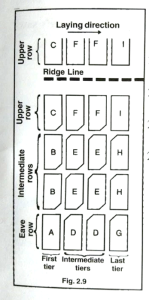
  • Inspect Roof Structure: Inspect Roof Structure: Check purlin spacing, sheet length, and ensure proper alignment with a minimum 150 mm end lap, 40 mm side lap and appropriate overhang.
  1. Sheet Arrangement:
  • Starting Point: Begin at the bottom left corner, aligning the first sheet with the purlin, smooth side out.
  • End & Side Laps: Maintain a 150 mm end lap and at least 1/2 corrugation side lap for effective drainage.
  1. Laying and Fixing Sheets:
  • First Sheet: Place with downward corrugation on the left, upward on the right.
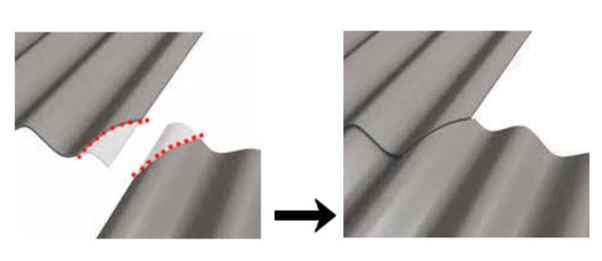
  • Next Sheets: Overlap properly, ensuring mitred corners fit securely.


fibre cement roofing sheet


      4. Ridge and Eaves:

  • Ridge Sheets: Fit correctly to prevent leaks.
  • Eaves Overhang: Keep overhang within 300 mm to avoid stress.
  1. Fixing Sheets and Bolting
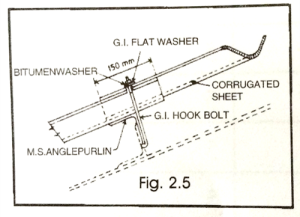
  • Drilling Holes: Drill 10 mm holes on corrugation crowns, using 8 mm hook bolts.
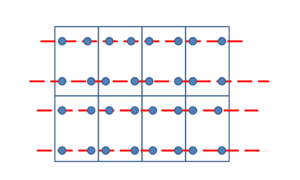
  • Bolt Placement: Bolt Should be placed adjacent to side laps on every purlin. Overtightening of bolts should be avoided which leads to crack development in the summer season


  1. Mitring and Cutting:
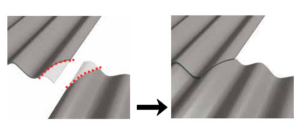
  • Cutting Sheets: Use a carpenter’s saw, ensuring clean cuts. Dimension of mitring- 150 mmx 40 mm.
  • Mitring Corners: Mitre intermediate sheets at lap joints for a snug fit.


  1. Final Checks and Adjustments:
  • Check Alignment: Regularly check the alignment of sheets to ensure they remain straight.
  1. Points to remember while fixing of sheets
  • Smooth surface of the sheet should be upwards.
  • Never punch holes – drill them.
  • Drill holes in sheets – at least 2 mm larger than fixing bolts.
  • Be sure sheets are mitred by cutting with a saw.
  • Nuts should be screwed lightly first and tightened only after 13 or 14 sheets are laid.
  • Tighten the nuts evenly allowing the bitumen washer to merely seal the space between the holes and bolts.
  • overtighten the nuts. Allow for the movement of structure.
  • Don’t exceed purlin spacing of 1.4 metres for roofing and 1.7 metres for side claddings.
  • Provide a purlin at every end.
  • Don’t exceed free overhang of 300 mm at eaves.
  • Slope of the roof not less than 18 degrees.
  • Proper cross ventilation to be maintain in the room to minimise condensation effect in the rainy season.
  • Wherever four corners of sheets overlap, the intermediate two Sheets must be mitred in order to secure a perfect fit. The length and breadth of mitre should be equal to the length of the end lap and the breadth of the side lap of the roofing sheets.
  • If mitring is not done, staggered fixing method to be adopted.

By following these steps and incorporating best practices, you can ensure a secure and durable installation of fibre cement corrugated roofing sheets.


adminfcpma No Comments

WHY CHOOSE FIBRE CEMENT SHEET FOR YOUR SLOPING ROOF?

Have you ever considered why roof designs vary worldwide? Roofs primarily protect inhabitants from different weather conditions, leading to regional variations in design. In snowy regions, roofs are crafted to shed snow efficiently, while in hot climates, they focus on minimizing heat absorption.

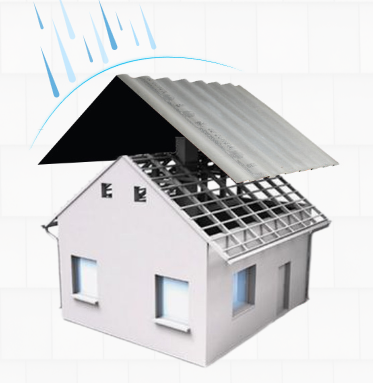
Pitched roofs are designed to effectively shed heavy snowfall and monsoon rains, preventing water and snow build-up, which can lead to leaks and structural damage. The slope of pitched roofs also enhances ventilation and thermal insulation, helping to keep homes cooler during hot summers and warmer in cold winters. Beyond their functional advantages, pitched roofs are a traditional architectural feature in India, adding aesthetic charm and cultural significance. They reflect a blend of heritage and practicality in residential design.

What is a sloping roof or Pitched roof?

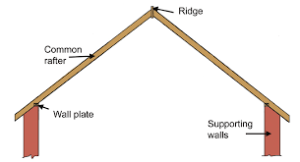
Pitched roof or sloping roof is one that has an angle of inclination greater than 10° with respect to horizontal.


SLOPING ROOF


Why Cement Sheet Is Right Choice?

Dead Weight: – 

Fibre cement roofing sheet have dead weight around 11-13kg compare to other roofing material. Dead weight of a cement roof ensures it remains securely in place during heavy rain and strong winds. This inherent stability makes cement roofs ideal for pitched structures, as they are less likely to be lifted or displaced by severe weather conditions.

Weather Resistant: –

A pitched roof with a cement sheet covering offers exceptional weather resistance, thanks to its natural slope that facilitates efficient water runoff. Additionally, many cement roof comes with a special water-resistant coating, ensuring superior protection against leaks and water damage. They are also resistant to rot, fungi, and termites, making them a long-lasting roofing option. This combination of design and material makes it an ideal choice for enduring harsh weather conditions while maintaining structural integrity and longevity.

Aesthetic Flexibility: –

Your home’s visual appeal can be enhanced by adding a designer ceiling, which is made possible by a sloped roof. Many roofing systems offer a seamless integration of style and functionality with built-in hardwood designer ceilings. Through this combination, homeowners can enhance their interior spaces with a hint of elegance and character while reaping the benefits of a pitched roof.

Zero Maintenance: –

A pitched roof with cement sheets requires zero maintenance, thanks to its durable materials and efficient design. The natural slope ensures effective water runoff, while the robust cement sheets resist weathering, pests, and fire. This combination not only enhances the roof’s longevity but also minimizes the need for maintenance.

Cost Effective: –

Cost of cement sheet is low compare to other alternative roofing material.  Also this sheets are known for their long lifespan and resistance to weathering, pests, and fire, reducing the need for replacements.  This all properties making cement roof a practical choice for homeowners looking to maximize value and longevity in their roofing investment.

Conclusion

Fibre cement roofs are an excellent choice for pitched roofs due to their durability, weather resistance, fire safety, cost-effectiveness, and environmental benefits. They offer long-term reliability and protection, making them a practical and sustainable roofing solution for both residential and commercial buildings. Choosing a fibre cement roof ensures that you get a robust, low-maintenance, and aesthetically pleasing roof that stands the test of time.

adminfcpma No Comments

Building a Greener Future: The Environmental Benefits of Using Fly Ash in Fibre Cement Roofing

Building a Greener Future: The Environmental Benefits of Using Fly Ash in Fibre Cement Roofing

In the world of construction, sustainability is no longer just a buzzword—it’s an urgent necessity. As industries strive to minimize their environmental impact, innovative practices are emerging that not only reduce waste but also enhance the durability and performance of construction materials. One such innovation is the incorporation of fly ash in cement roofing. By adopting sustainable construction methods, we can reduce our carbon footprint, conserve resources, and build resilient structures that meet current demands without compromising the future. Notably, in India, fly ash has been utilized in cement roofing sheets for the past two decades, highlighting the long-term benefits and viability of this sustainable approach.

In this blog, we will delves into the environmental benefits of using fly ash in cement roofing, transforming waste into a wonder.

What is Fly Ash?

Fly ash is a fine, powdery byproduct generated during the combustion of pulverized coal in thermal power plants. Composed primarily of silica, alumina, and iron, fly ash was once considered a waste material and disposed of in landfills, contributing significantly to environmental degradation. However, it has now emerged as a valuable resource material and an environmental savior. By repurposing fly ash in construction, particularly in cement and concrete production, we reduce landfill use, lower carbon emissions, and enhance the sustainability and durability of building materials.

Environmental Benefits of Using Fly Ash in Cement Roofing

  1. Waste Reduction

Utilizing fly ash in cement roofing significantly reduces waste by diverting this industrial by product from landfills. This practice not only mitigates the environmental hazards associated with fly ash disposal but also conserves landfill space, supporting the concept of a circular economy.

  1. Energy Efficiency

Incorporating fly ash into cement roof manufacturing reduces energy requirements by replacing a portion of the energy-intensive clinker. Fly ash eliminates the need for the high-energy calcination process required for clinker and minimizes grinding since it is already fine. These factors lead to significant energy savings and a reduced carbon footprint in the production of cement roofing materials.

  1. Enhanced Durability

Fly ash is known for its pozzolanic properties, which improve the chemical reactions within the cement mixture, leading to stronger and more durable roofing material. It enhances the material’s resistance to cracking, shrinking, and water infiltration, meaning roofs last longer and require fewer repairs, reducing the resources and energy expended on maintenance and replacements.

  1. Resource Conservation

Integrating fly ash into cement roof manufacturing reduces the need for raw materials. This helps preserve natural habitats and reduces the energy consumption associated with mining and processing traditional cement ingredients.

  1. Cost-Effectiveness

Fly ash is more affordable than traditional cement components, which can lower the overall cost of cement roofing. This cost benefit makes sustainable building practices more accessible to a broader range of projects.

Conclusion

Incorporating fly ash into cement roofing is a powerful step towards environmental sustainability. This practice reduces landfill waste, conserves natural resources, and decreases the carbon footprint of construction projects. Choosing fly ash-enhanced cement roofing is not just an investment in a durable and resilient roof, but also a commitment to a greener, more sustainable future. Let’s continue to turn waste into wonder and build a better world together.

adminfcpma No Comments

Sustainable Roofing: The Environmental Benefits of Fibre Cement Sheets

Sustainable Roofing: The Environmental Benefits of Fibre Cement Sheets

When constructing a house or building, roofing is a crucial element that greatly affects the overall sustainability and environmental footprint of the structure. Selecting the right roofing solution is vital for enhancing energy efficiency, minimizing waste, and promoting a healthier environment.

Understanding Fibre Cement Roofing Sheets

Fibre cement sheet is a composite material made from cement, chrysotile fibre, fly ash, and other components. This combination creates a robust and resilient product suitable for diverse roofing applications.

fibre cement roofing sheet

Environmental Benefits

  1. Incorporation of Fly Ash
  • Waste Diversion: Fly ash, a byproduct of coal combustion in thermal power plants, consists mainly of silicon dioxide, aluminium oxide, and calcium oxide. Historically, fly ash was disposed of in landfills, causing environmental pollution. Utilizing fly ash in fibre cement roofing diverts significant amounts of waste from landfills, supporting circular economy principles by promoting efficient resource use and reducing dependency on raw materials.
  • Regulatory Support: The Ministry of Environment, Forest and Climate Change permits the use of fly ash in cement products, promoting sustainable development.
  1. Longevity and Durability

Fibre cement roofs are known for their exceptional longevity and durability, often lasting up to 50 years or more. A longer lifespan means fewer replacements over time, conserving resources and reducing waste.

  1. Energy Efficiency

The thermal properties of fibre cement roofing help maintain indoor temperatures. With a good Solar Reflectance Index (SRI) value, these roofs reflect solar radiation away from the building, reducing the need for heating and cooling, lowering energy consumption, and reducing greenhouse gas emissions.

  1. Sustainable Manufacturing

Fibre cement roofs are manufactured using sustainable practices, including energy-efficient manufacturing processes, recycled materials, and local vendor sourcing to reduce transportation emissions.

Fibre cement products require only one-fourth to one-sixth of the energy compared to metal sheets and pipes, resulting in lower greenhouse gas emissions and a smaller carbon footprint.

  1. Zero Maintenance

Once properly installed, fibre cement roofs require no maintenance. They are resistant to rot, pests, and harsh weather conditions, saving repair costs and reducing the environmental impact associated with ongoing upkeep.

Conclusion

Choosing fibre sheets for roofing is a significant step toward sustainable building practices. Its durability, low maintenance, energy efficiency, recyclability, and sustainable manufacturing processes make it an eco-friendly option that benefits both the environment and users. By opting for modern fibre cement roofing, you are investing in a high-quality, long-lasting roof and contributing to a more sustainable future.