adminfcpma No Comments

What Is Asbestos Fibre

What Is Asbestos Fibre

Chrysotile fibre, commonly known as white Fibre, is a naturally occurring mineral found mostly in underground rock formations all over the World. Its commercial deposits are found in Canada, Brazil, Zimbabwe, Russia, China and to some extent in India too. Its high tensile strength, heat resistance, and chemical durability make it a vital component in Fibre Cement sheets and pipes. Unlike its banned counterparts from the Amphibole group, Chrysotile is considered safe when used under controlled conditions.

What is Chrysotile Fibre?

Chrysotile fibre belongs to the Serpentine mineral group and is extracted through mining and rock crushing. It has been widely used for decades in the construction industry due to its reinforcing properties and exceptional durability.

The Two Types of Fibre

Asbestos Fibre is a commercial term for six silicate minerals with fibrous crystal formations. These minerals fall into two distinct groups:

  1. Serpentine GroupChrysotile (White Fibre Cement)
    • The only variety currently in commercial use
    • Can be used safely under controlled conditions
    • Imported primarily from Russia, Kazakhstan, and Brazil
  2. Amphibole Group – Banned globally due to health risks
    • Amosite (Brown Fibre Cement)
    • Crocidolite (Blue Fibre Cement)
    • Tremolite, Actinolite, and Anthophyllite

Mining, production, and usage of the Amphibole variety have been prohibited worldwide due to their hazardous effects on health.

The Unique Properties of Chrysotile Fibre

Chrysotile fibre possesses outstanding thermal stability and very high tensile strength. It can withstand temperatures up to 1450°-1500°C (2580°-2670°F), comparable to volcanic lava. Its tensile strength surpasses that of steel, and it is flame-proof, rustproof, and has low electrical and thermal conductivity. These superior properties make it invaluable for construction and insulation materials

Applications of Chrysotile Fibre

Chrysotile Fibre Cement is valued for its superior reinforcing capabilities, making it an essential component in various industries. Some of its key applications include:

  • Construction: Used in Fibre Cement sheets, roofing, and insulation materials.
  • Automotive Industry: Found in brake linings, clutches, and gaskets.
  • Soundproofing: Used in acoustic insulation and vibration-damping materials

Chrysotile Fibre in Our Everyday Life

Fine fibres, invisible to the eye, naturally exist in the air and water across the globe. This means that people unknowingly inhale or ingest these fibres daily. Despite this, studies suggest that Chrysotile remains safe for human exposure under controlled use conditions.

Conclusion

Chrysotile fibre, with its remarkable strength and versatility, remains an essential material in modern construction. This can be used safely under controlled conditions at workplace and does not pose any health hazard to users of Chrysotile cement products.  While Amphibole Fibres Cement is are banned globally for commercial purpose, Chrysotile continues to be used safely, ensuring strong and durable infrastructure. Its continued presence in the industry reinforces its status as a magic mineral.
adminfcpma No Comments

How Fibre Cement Roofing Contributes to the Indian Economy

How Fibre Cement Roofing Contributes to the Indian Economy

Fibre cement roofing, a widely used building material in India, plays a significant role in the country’s economic landscape. Its impact extends across multiple sectors, including employment, industrial growth, rural development, infrastructure, and sustainability.

This blog explores the various ways in which fibre cement roofing contributes to the Indian economy, making it a vital component in the nation’s construction industry.

  1. Job Creation and Employment

Fibre cement roofing significantly boosts the Indian economy by creating jobs. With an industry size of INR 8,000 crore+, it provides direct and indirect employment to over 300,000+ people across various sectors. This robust job market is essential for supporting livelihoods and enhancing the well-being of communities throughout India.

fcpma job creation


     2. Support for the Construction Industry

Construction sector is a vital pillar of India’s economy and fibre cement roofing is a key material used in a wide range of building projects. Whether it’s home, commercial buildings or complex, large scale-infrastructure, resorts etc, fibre cement roofing sheet used everywhere and it offers numerous advantages:

  • Affordability: Fibre cement roofing sheets are cost-effective compared to metal, clay tiles, and concrete, addressing the housing needs of India’s growing population, particularly in rural and low-income areas.
  • Durability: They are resistant to fire, water, pests, and impact, requiring no maintenance, which saves costs for homeowners and developers.

Versatility: Suitable for both sloped and flat roofs, as well as compound walls, ensuring consistent demand across various construction projects.

fcpma rural

  1. Boost to Rural Development

Fibre cement roofing is a popular choice in rural India for affordable homes, poultry shelters, animal shelters, and community buildings. Its affordability, durability, and ease of installation make it well-suited to regions with limited access to resources.

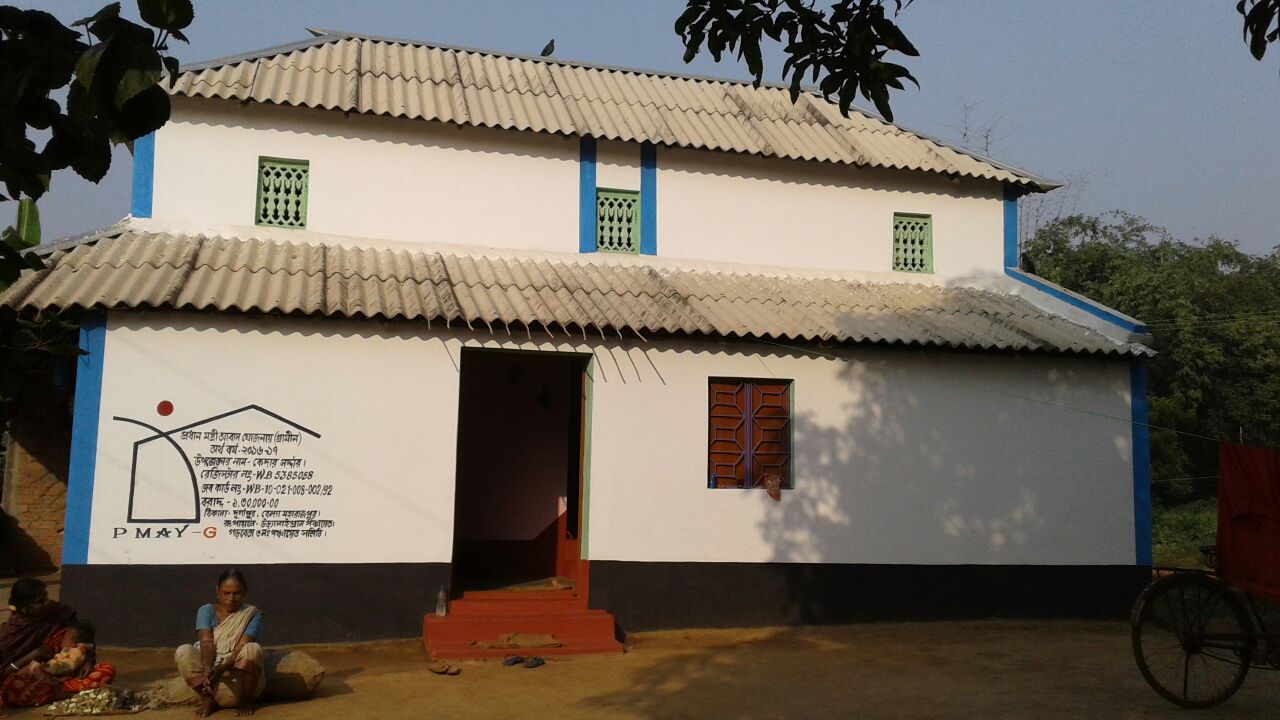
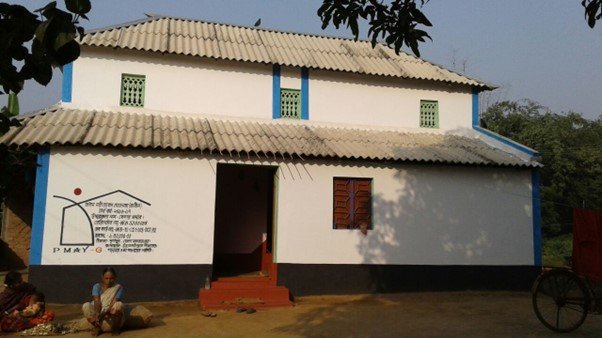
  • Affordable Housing Solutions: It plays a crucial role in programs like Pradhan Mantri Awas Yojana (PMAY), helping meet rural housing demand and improving living standards for millions.
  • Agricultural Infrastructure: Widely used for cattle sheds and storage units, fibre cement roofing protects crops and livestock. Its ventilation capabilities enhance airflow while providing insulation and soundproofing.

Community Infrastructure: Fibre cement roofing is commonly used in schools, hospitals, and community centers, supporting rural growth and enhancing the quality of life.

Pradhan Mantri Awas Yojana (PMAY)

(https://prd.wb.gov.in/img/PMAYGinner2.jpeg)


  • 4. Growth of the Manufacturing Sector

India is one of the world’s largest producers of fibre cement products. The manufacturing of fibre cement roofing sheets supports the growth of the cement and building materials industries, further enhancing their contribution to the economy.

  • Raw Material Demand: The production of fibre cement sheets requires substantial amounts of cement, sand, fly ash, and fibres, boosting demand and supporting related industries.
  • Technological Advancements: The fibre cement industry in India is advancing with technological innovations, including automation, that enhance production efficiency and product quality. Making the industry more competitive and facilitating exports to neighboring countries.
  • Energy Efficient: – Producing a Fibre Cement (FC) sheet consumes only 2 to 4 kWh per square meter, significantly lower than the 20 to 35 kWh required for a steel sheet. This stark difference in energy usage highlights how FC sheets contribute to energy conservation. By opting for FC sheets, we can help the country become more energy-efficient, reducing overall consumption and supporting sustainable development.

As the fibre cement roofing industry expands and modernizes, it strengthens India’s manufacturing base and boosts the country’s industrial output.

fibre cement roof manufacturing


  1. Government Initiatives and Policy Support

The Indian government has recognized the role of the building materials sector, including fibre cement roofing, in driving economic progress. Several government initiatives and policies have supported the growth of the fibre cement industry:

  • Affordable Housing Schemes: Government initiatives like PMAY have increased the demand for low-cost, durable roofing solutions, providing a boost to the fibre cement sector.
  • Smart Cities Mission: This initiative focuses on sustainable and energy-efficient urban development, positioning fibre cement roofing as a key player in these projects.
  • Infrastructure Development: Investment in infrastructure continues to fuel demand for fibre cement products in industrial and commercial projects, benefiting from the expanded construction activities.

smart cities mission

Conclusion

Fibre cement roofing is a cornerstone of the Indian economy, driving job creation, supporting the construction industry, and advancing rural development. Known for its affordability, durability, and versatility, it is a vital material in India’s infrastructure growth. With the country’s focus on sustainable development and affordable housing, fibre cement roofing will continue to play a crucial role in the nation’s economic progress.


adminfcpma No Comments

How Chrysotile Fibre Cement Roofing Contributes to Structural Integrity and Safety?

How Chrysotile Fibre Cement Roofing Contributes to Structural Integrity and Safety?

What is Chrysotile Fibre?

Chrysotile fibre is a type of asbestos from the serpentine mineral group, it’s a naturally occurring mineral known for its heat resistance, low thermal conductivity, durability, and cost-effectiveness. The most common use for chrysotile fibre is within corrugated cement roof sheet and cement pipes etc.

Chrysotile fibre cement roofing has been used for its strength and durability, contributing to both structural integrity and safety in several ways:

  1. High Tensile Strength:
  • Chrysotile fibre consisting of magnesium silicate has a unique crystalline structure where silicon-oxygen tetrahedra are interconnected by magnesium ions. This formation creates a strong and stable lattice, giving the fibres exceptional tensile strength and flexibility. This strength is a key factor in the durability of roofing sheets, making them resistant to cracking, breaking, or deforming under stress, thereby maintaining long-lasting structural integrity.
  1. Fire Resistance:
  • Chrysotile fibre’s fire resistance is attributed to its high melting point and inorganic nature, which prevent it from igniting or burning when exposed to heat. Its stable crystalline structure ensures that the fibres remain intact even under extreme temperatures, making it highly effective for fireproofing and insulation. This fire-resistant quality minimizes the risk of roof ignition during external fires, thereby safeguarding the structure and its occupants.
  1. Weather Resistance:
  • Chrysotile fibre is weather resistant due to its chemical stability, non-porous nature, and resistance to UV radiation. These properties prevent degradation from moisture, sunlight, and other environmental factors. Additionally, its flexibility and strength enable it to withstand temperature fluctuations and weather-related stresses, making it durable in outdoor applications. This resilience helps the roof retain its structural integrity over time, minimizing deterioration or weakening caused by the elements.
  1. Insulation Properties:
  • Chrysotile fibre is renowned for its insulation properties due to its low thermal conductivity and high heat resistance. The fibrous structure of chrysotile creates a network that traps air, which effectively reduces heat transfer, making it an excellent thermal insulator. Additionally, its dense, flexible nature helps in sound absorption, providing good acoustic insulation. These properties make chrysotile effective in maintaining temperature and reducing noise, enhancing comfort in buildings.
  1. Cost-Effective:
  • The long lifespan and durability of chrysotile fibre cement roofing make it a cost-effective solution, providing safety and structural integrity without frequent investment in repairs or replacements.

By combining strength, fire resistance, weather resistance, and longevity, chrysotile fibre cement roofing significantly contributes to the structural integrity and safety of buildings.